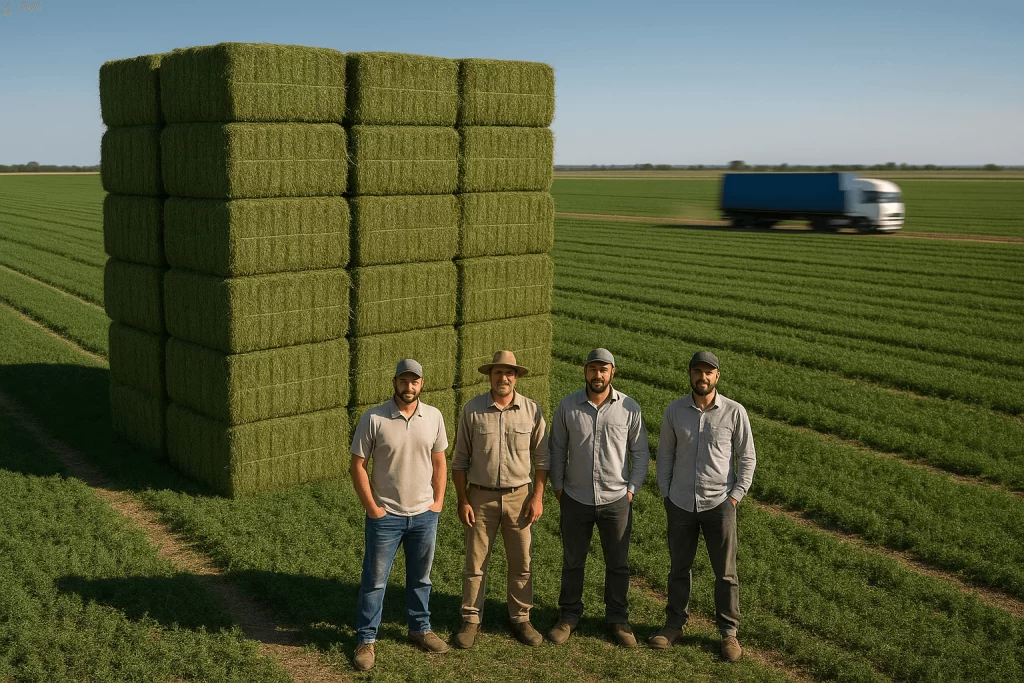
Alfalfa production faces a growing challenge in many regions: labor shortages. This problem not only impacts harvest and processing times but also compromises the quality of the final product and the producer's profitability.

In a context where it is increasingly difficult to find trained personnel willing to perform intensive tasks in the field, it is essential to explore concrete solutions. From mechanization to new forms of association, in this article we analyze the most effective alternatives to sustain and even improve productivity in the face of a lack of available workers.
Automation of field processes
Machinery for cutting and harvesting
The incorporation of automated machinery for alfalfa harvesting has been key in facing the shortage of workers. Equipment such as self-propelled mowers and high-capacity balers helps reduce reliance on manual labor. This type of machinery not only replaces physical effort but also improves process efficiency.
A single operator can cover larger areas with greater speed and less margin of error.
Smart irrigation technology
The use of automated irrigation systems with humidity sensors and app-based remote control is changing how water is managed. These tools minimize repetitive tasks and optimize crop performance.
Through digital platforms, producers can activate or pause irrigation from any location, reducing the need for field labor and improving response to changing weather conditions.
Seasonal hiring and rotating labor
Temporary agreements with rural communities
Facing the lack of permanent workers, some producers have opted to establish temporary work agreements with rural communities or cooperatives. This allows them to meet seasonal demand without maintaining a permanent workforce.
This model offers flexibility for both parties: producers solve operational issues, and communities gain temporary income opportunities without long-term commitments.
Use of legalized migrant labor
In regions where viable, programs for hiring legal migrant workers have been implemented, including lodging and decent working conditions. This requires coordination with public agencies and recruitment firms.
Although logistically challenging, these workers often bring valuable experience in tasks such as sorting high-quality alfalfa or manually controlling weeds.
Outsourcing specific tasks
Pay-per-hectare service contracts
Many producers choose to outsource tasks such as cutting, baling, or transporting, paying per hectare worked. This lets them benefit from the scale economies of contractors who already have equipment and trained staff.
This model provides cost predictability and removes the need for complex payrolls. Contractors usually have experience with alfalfa and can respond quickly to operational challenges.
Producer collaborations
Another effective strategy is collaboration between producers to share resources. For instance, taking turns using machinery or jointly hiring third-party services reduces costs and boosts operational efficiency.
These agreements require trust and clear rules, but when done right, they help mitigate labor shortages without significant initial investments.
Training and workforce retention
Local technical training
Investing in technical training for local youth helps fill vacancies with qualified and committed workers. Training in machinery use, agricultural best practices, and digital technologies is a long-term investment.
Partnerships with rural schools or public programs help create a base of specialized workers who remain in the agricultural sector and contribute to its development.
Improved working conditions
In highly competitive labor environments, offering better working conditions can be a decisive advantage. This includes competitive wages, organized schedules, decent lodging, and proper recognition.
Worker retention avoids constant turnover and allows for the development of stable, experienced teams. Employee well-being directly impacts farm productivity.
Emerging technological innovations
Drones and sensors for crop monitoring
Agricultural drones and remote sensors allow producers to monitor crop status without walking long distances. This technology detects pests, water deficiencies, or forage maturity in real time.
Aerial monitoring lightens staff workload and enables more precise decision-making, enhancing productivity without expanding human resources.
Digital management platforms
Mobile apps and specialized software enable task planning, resource allocation, and production tracking digitally. This reduces the need for continuous field supervision.
These tools also gather data that can be used for strategic decisions, such as scheduling shifts, assessing plot yields, or anticipating logistics needs.
Integration of robotic solutions
Baling robots and plant automation
Though still emerging in some countries, the adoption of agricultural robots for repetitive tasks like baling, loading, or sorting alfalfa is a reality in advanced markets. These machines operate non-stop with high precision.
In processing plants, robotic arms can handle packaging or labeling tasks. While installation requires investment, the return lies in reduced errors and faster throughput.
The future of agricultural robotics
Global trends point to progressive automation of farming, with technologies combining visual recognition, AI, and robotics. Though adoption is gradual, this offers a sustainable answer to chronic labor shortages.
The challenge lies in adapting these technologies to each producer’s context, evaluating cost-benefit ratios and process compatibility. Technical support is essential for successful implementation.
Role of public policy and institutional support
Incentive programs for mechanization
Many governments are launching programs to promote agricultural mechanization, including subsidies, soft loans, or tax breaks for producers who invest in technology. These measures ease the economic burden of modernizing farms.
Access to targeted financing can make the difference between struggling with outdated systems or upgrading to more sustainable and efficient operations amid labor scarcity.
Public-private partnerships
The development of joint projects between the public sector and technology companies helps speed up adoption of agricultural solutions. Examples include training platforms, technical support programs, or rural innovation hubs.
These partnerships may also strengthen distribution networks for agri-tech inputs, technician training, and simplified procedures for accessing government benefits. A coordinated vision multiplies impact.
Conclusion
The labor shortage in alfalfa production is a growing challenge, but there are many ways to tackle it: from technology and automation to strategic partnerships and workforce development. Combining several of these strategies can address immediate needs while building a more resilient, efficient, and future-ready agricultural production system.